Digital HACCP vs Paper HACCP
HACCP (Hazard Analysis and Critical Control Points) has anchored food safety management for decades. It gives businesses a systematic way to spot, monitor, and control risks at every stage of production. But how businesses record and manage that data is changing fast, and digital HACCP is leading the shift. Clipboards and binders are giving way to tablets, sensors, and cloud dashboards. So which approach actually works better — paper or digital HACCP?
What Is Digital HACCP?
Digital HACCP replaces paper logbooks with connected apps, sensors, and dashboards. These tools capture food safety checks — like temperatures and sanitation records — automatically and in real time. In Ireland, food businesses must follow HACCP-based procedures under EU hygiene regulation. The Food Safety Authority of Ireland (FSAI) explains what this involves. Before comparing the two approaches directly, let’s look at where paper-based HACCP still falls short.
The Case for Paper HACCP
Paper-based systems have one major advantage: familiarity. Many food businesses have used the same logbooks and checklists for years. Staff know exactly how to fill them in. There’s no software to learn, no upfront cost for hardware, and no dependence on Wi-Fi or power.
But paper has real limitations. Records are only as accurate as the person writing them. Staff sometimes estimate temperatures instead of measuring them. They backfill entries at the end of a shift. Handwriting can be illegible or inconsistent. Storing and retrieving paper logs for audits takes time, and a lost or damaged binder can wipe out your compliance history. Most importantly, paper systems react to problems instead of preventing them — staff often don’t spot issues until someone reviews the records days or weeks later.
The Case for Digital HACCP
Digital HACCP systems use connected sensors, mobile apps, or tablets to capture data in real time. A temperature probe can log a reading the moment staff complete a check, timestamped and tied to a specific batch or unit. Say a fridge runs too warm and breaches a critical limit. Instead of waiting for someone to notice on paper the next day, the system sends an instant alert.
This shift from reactive to proactive monitoring is the biggest benefit of going digital. Other advantages include:
- Fewer errors — automated data capture removes guesswork and illegible handwriting
- Instant audit trails — staff can search and export records in seconds, not hours
- Trend visibility — dashboards make it easy to spot recurring issues before they escalate
- Accountability — the system ties every entry to a user, time, and device, cutting down the temptation to fill in gaps later
The trade-offs are real too. You’ll need upfront investment in hardware and software. Staff face a learning curve. And you’ll need stable connectivity or a backup process for when systems go down.
So Which Should You Choose?
Paper HACCP can still work for very small, simple operations — as long as staff stay disciplined about timely, accurate recording. But as businesses scale, or as regulators and customers demand faster, more reliable proof of compliance, digital systems offer a clear edge. They don’t just record food safety data. They help you act on it before a small deviation becomes a serious hazard.
The direction of travel across the industry is clear. Digital HACCP is quickly becoming an expectation, not just a convenience. Businesses that adopt it early don’t just modernize their paperwork. They build a food safety culture that catches problems before they reach the plate.
How KitchTech Makes the Switch Easy
Moving away from paper doesn’t have to mean a disruptive overhaul. KitchTech makes the transition to digital HACCP simple, even for teams used to clipboards and binders.
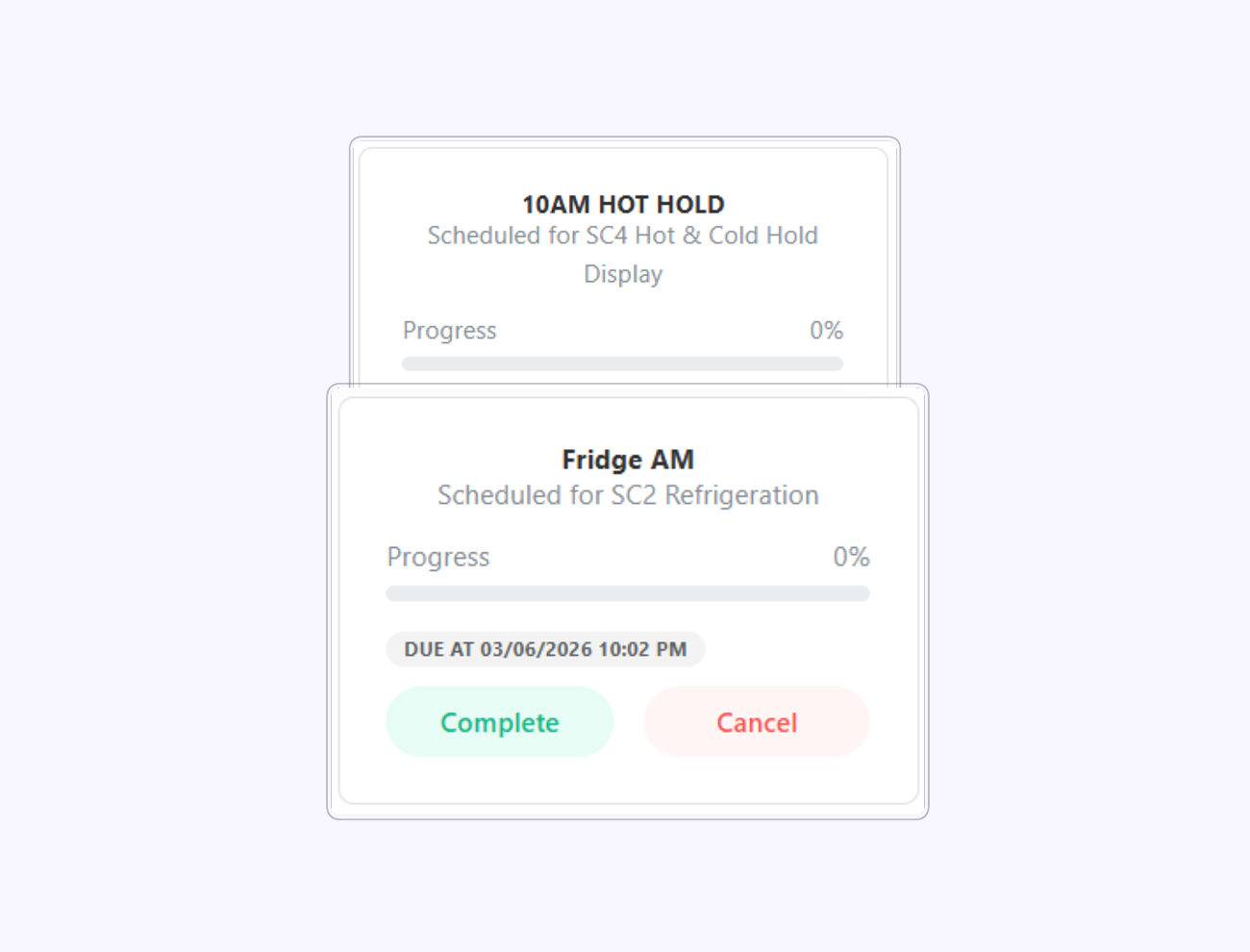
- Guided, mobile-first checks — staff log temperatures, sanitation checks, and critical control points in seconds from a phone or tablet, with no paperwork to chase down later
- Real-time alerts — if a reading falls outside a safe range, KitchTech notifies the right person immediately, so issues get caught before they become incidents
- Audit-ready records, always — the system timestamps, attributes, and stores every check automatically, so inspections and audits take minutes instead of hours
- Built for busy kitchens — an intuitive interface keeps training time short, so teams get up and running fast without slowing down service
Whether you manage a single site or a multi-location operation, KitchTech gives you the visibility and confidence paper simply can’t. It turns food safety from a box-ticking exercise into a real-time safeguard for your business and your customers. Explore our full feature list or see KitchTech pricing for your business size.
Ready to leave the binders behind? Get in touch with KitchTech to see how digital HACCP can work for your kitchen.
Frequently Asked Questions
What is digital HACCP? Digital HACCP uses software, mobile apps, and connected sensors — instead of paper logs — to record, monitor, and manage Hazard Analysis and Critical Control Points in food safety.
Is digital HACCP required by law? Requirements vary by country and regulator. Most food safety authorities require businesses to follow HACCP principles but don’t mandate a specific format. Both paper and digital records can meet compliance if you keep them accurately.
How much does a digital HACCP system cost? Costs vary widely based on business size, number of sites, and features needed. Plans range from simple app-based tools to full sensor-integrated platforms. Contact KitchTech for a quote tailored to your operation.
Can small businesses use digital HACCP? Yes. Many digital HACCP tools, including KitchTech, scale down to single-site operations as easily as they scale up to multi-location businesses.